
Allahabad HC warns against tyrannical officials turning UP into a repressive state

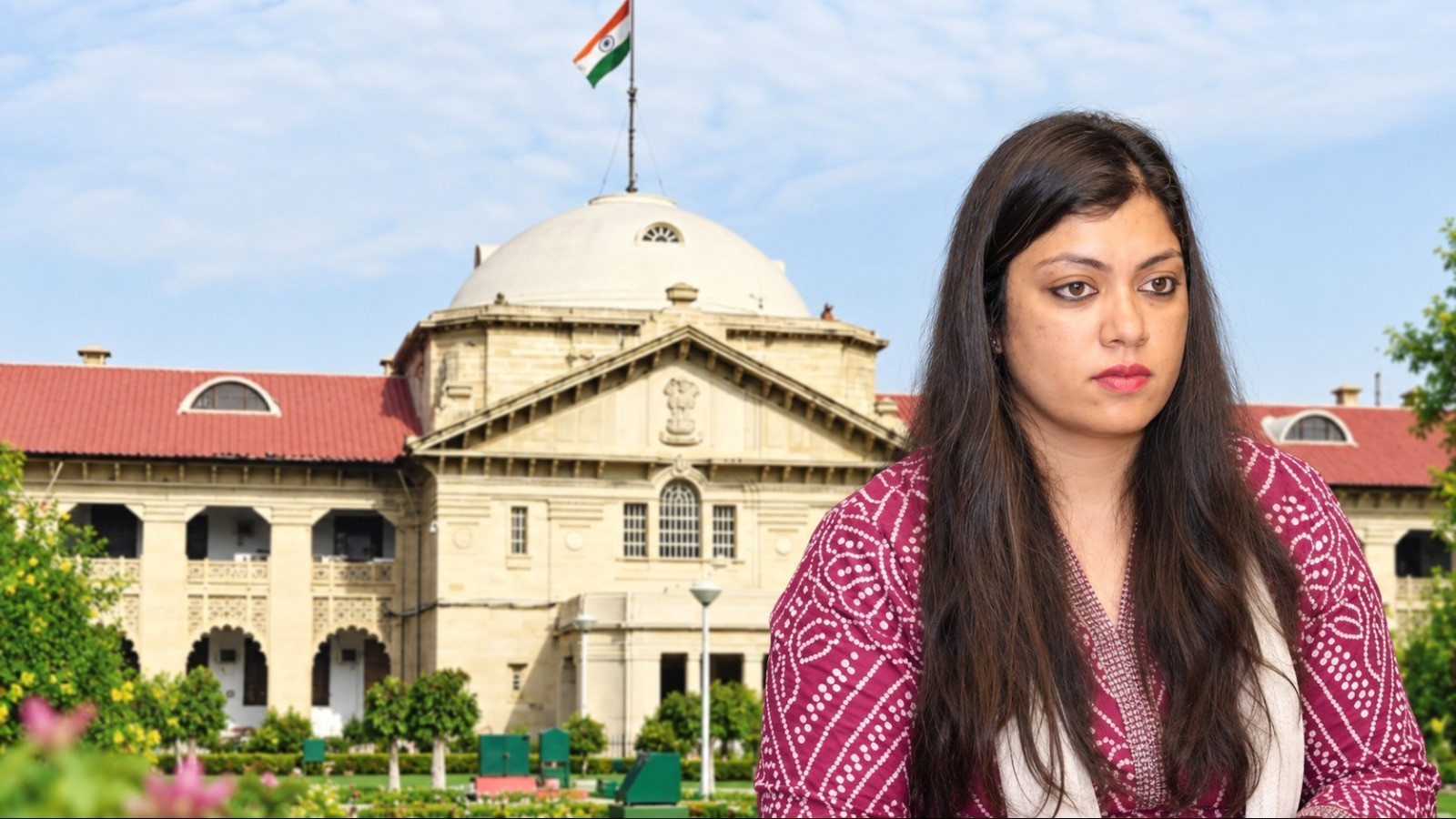
The Allahabad High Court has made strong remarks against the Uttar Pradesh government and DM Meha Rupam.
Allahabad High Court has made strong remarks against the Uttar Pradesh government and Gautam Buddh Nagar District Magistrate (DM) Medha Rupam in its ruling. The court sharply criticized the grounds for detaining student activist Akriti Chaudhary under the stringent National Security Act (NSA). According to a report by Live Law, the 15-page order stated that,
“When the bureaucracy and police act according to their duties and oaths, the citizens of the state respect them greatly. But if officials forget their oaths and act against them, the public may view them as remnants of the oppressive British regime. This can increase anger and discontent among the people and lead to social unrest. The court warned that if the officials who commit wrongdoings do not improve, it will not be long before Uttar Pradesh transforms into an Orwellian Dystopia, a state filled with fear and tyranny.”
In fact, the Allahabad High Court has quashed the charges against 25-year-old Akriti Chaudhary, who studied at Delhi University, under the National Security Act (NSA), and has reprimanded Gautam Buddh Nagar (Noida) DM Medha Rupam. It is noteworthy that Medha Rupam is the daughter of Chief Election Commissioner Gyanesh Kumar.
The court expressed strong displeasure over the government action and stated that,
“If the Uttar Pradesh police and officials continue to misuse their powers, Uttar Pradesh could become an Orwellian Dystopia, a repressive state where the government and administration exert excessive control over people's freedoms.”
It is important to note that 24-year-old Akriti Chaudhary was detained in April in connection with a workers' protest in Noida, which later turned violent. Akriti's name is registered in 11 FIRs, and she is currently imprisoned in Kasna Jail, Greater Noida.

The High Court ordered a compensation of ₹5 lakh to Akriti Chaudhary. The court stated that this amount should be recovered from the salaries of the DM and all officials responsible for this action, including the station officer who prepared the initial report for the detention under the NSA.
The court said that,
“The most talented young talents in the country enter the IAS and IPS services after a rigorous three-stage selection process. Before entering the service, officials take an oath to protect the Constitution, the sovereignty and integrity of the country, and to perform their duties with honesty and impartiality. Officials must understand that their loyalty is not to any political government or leader, but to the Constitution. They should remain honest and impartial to the public. In a democracy, the public is the master, and officials are their servants.”
The High Court stated that,
“When bureaucrats and police officials work according to their oaths, the public holds them in high esteem. But when they forget their oaths and act against them, people begin to see them as remnants of the oppressive British regime. This creates anger, hatred, and unrest among the public.”
The court warned that,
“If officials continue to violate citizens' freedoms without just cause and legal process, the court may issue strict orders to provide compensation to the aggrieved citizens and may record the oppressive behavior of the officials.”
The court stated that the conduct of Gautam Buddh Nagar DM Medha Rupam is deserving of condemnation. The police report against Akriti contained only allegations, and there was no credible evidence to support them. In such a case, the DM was expected to thoroughly examine all records. The DM should also have considered whether the use of a stringent and oppressive law like the NSA was truly necessary and why ordinary laws were insufficient.
Akriti is a student activist, has no prior criminal record, and was protesting in support of workers' rights. There was no evidence in the records to prove that she incited violence. The court stated that under these circumstances, it appears that the DM wanted to make an example of Akriti to deter others from voicing their support for workers in public spaces. The court said that the DM has violated her constitutional oath, hence it is appropriate to grant compensation to Akriti.
The High Court clarified that even after the order quashing the NSA in this case, Akriti will not be released from jail immediately, as there are other criminal cases registered against her. She will have to remain in jail as an undertrial prisoner until bail is granted in those cases. Nevertheless, due to the careless use of authority by the DM and the violation of Akriti's constitutional rights, the court ordered a compensation of ₹5 lakh to her.
“This amount will be recovered from the salaries of the DM and other officials involved in issuing the detention order without proper consideration. This includes the station officer who prepared the initial report against Akriti.”
The court also directed that the court's displeasure regarding the conduct of the DM and the concerned police officials be recorded in their service books. The High Court stated that detaining a person under the NSA is an extraordinary measure. It cannot be used to keep someone in jail who has a likelihood of being granted bail based on the facts of their case.
According to the court,
“The grounds for detention provided by the DM were repetitive, speculative, and merely personal opinions. Not a single solid piece of evidence or material was presented in support of those allegations. Mere allegations and the opinions of officials are not sufficient to detain a person.”
The court stated that,
“Every society has tensions and disagreements regarding the functioning of the government. Allowing people to engage in peaceful protests is like a safety valve for a pressure cooker. It allows the anger and pressure that builds up within people to be released. If protests are suppressed and people's sentiments are stifled, they may eventually erupt on the streets. In such a situation, the risk of violence increases, which can be difficult for the police and administration to control.”
In paragraph 25, the court stated that keeping Akriti in jail under the NSA continuously violates the right to life and personal liberty guaranteed under Article 21 of the Constitution.
It is noteworthy that following the violence after the workers' protest in Noida, the police took significant action. A total of 15 FIRs were registered, implicating hundreds of people, and at least 60 individuals were sent to jail. Even a month later, the families of the accused are waiting to see what will happen next. These include masons, history students, graduates from NIT, and individuals working in private companies.
“The District Magistrate Medha Rupam, who ordered Akriti's detention, was described by the court as ‘worthy of ridicule’. The court stated that the police report contained only allegations against Akriti, and there was no solid and credible evidence against her. In such a case, the District Magistrate should have carefully investigated the entire matter. She should have checked whether there was indeed any evidence to support the allegations. Only after that should she have determined whether it was necessary to apply stringent laws like the NSA against Akriti. The court also noted that the District Magistrate should have considered whether ordinary laws were not sufficient for action against Akriti.”