
Rahul Gandhi accuses PM Modi of bowing to US pressure on UPI charges

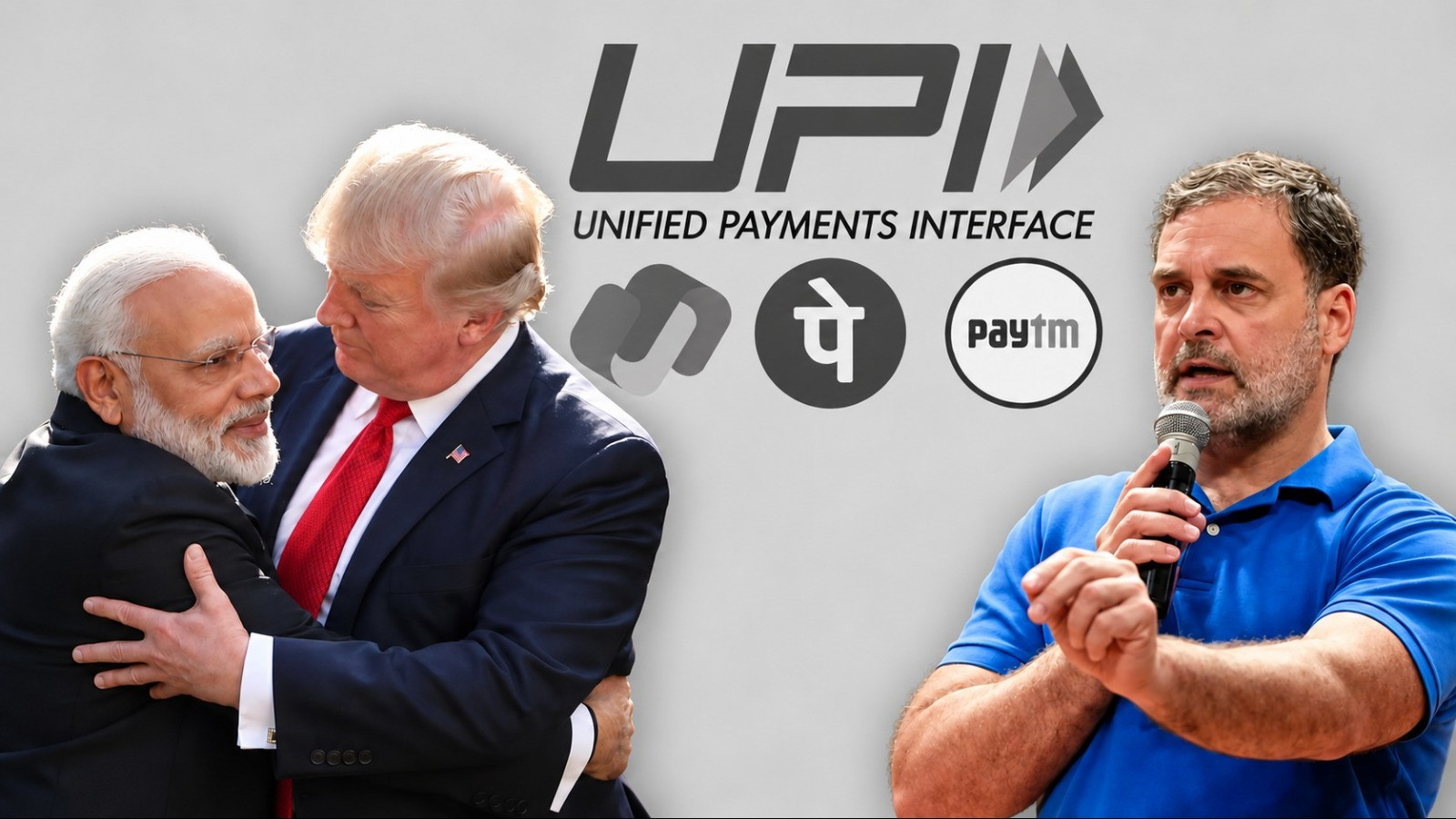
Rahul Gandhi claims the Modi government has quietly paved the way for charges on UPI payments.
Leader of the Opposition in the Lok Sabha, Rahul Gandhi, criticized the BJP-led central government, stating that it has capitulated to the pressure of American payment corporations by initiating the process of imposing charges on UPI.
In an ex-post, Gandhi argued that although the government claims that consumers will not be charged directly, allowing a merchant discount rate (MDR) on transactions over ₹2,000 will ultimately lead to increased retail prices.
Rahul Gandhi said that,
The Modi government has quietly opened the door to imposing charges on UPI. Now, MDR (Merchant Discount Rate) can be applied to UPI transactions over ₹2,000. Even if these transactions account for only 5% of total transactions, they constitute about 65% of the total transaction value of UPI. The government claims that no charges will be levied on customers. But where will this charge imposed on shopkeepers come from? It will be added to prices, paid directly from the customer's pocket,
the Congress leader stated that,
American payment companies have long opposed India's zero MDR policy, and further alleged that the Modi government has opened the way for changing the policy in exactly that direction. Like the trade agreement with the United States, compromising Prime Minister Modi is once again bowing to American pressure.
These comments came after a notification from the Finance Ministry stated that no direct or indirect charges could be levied by banks or system providers on UPI transactions up to ₹2,000, effectively keeping about 96 percent of UPI transactions within the zero-fee limit based on volume.
This morning, Congress National President Mallikarjun Kharge alleged that instead of providing relief to the inflation-burdened public, the Modi government is finding new ways to loot their pockets every day.
Criticizing the notification, he said,
The Modi government's loot has now reached UPI. The phrase 'no charges on UPI' has been changed to 'no charges on UPI transactions up to ₹2,000'. Soaring inflation has already emptied the pockets of the common man. The wholesale inflation rate is nearly 10%, and the BJP government plans to impose a 'digital payment tax' on the public, aimed at wiping out their remaining savings.
Leader of the Opposition in the Lok Sabha, Rahul Gandhi, did not say this without reason that PM Modi has bowed to American pressure, which is why preparations are being made to impose charges on UPI payments. The truth is that since the inception of UPI in India, American payment companies Visa and Mastercard have been raising the issue of potential business losses.
At a time when the Indian government is preparing to finalize a trade deal with the United States, a bill has been introduced in Parliament, and now the government has also issued a notification that may allow charges on UPI and Rupay Debit Card payments. This is not without reason. In fact, the U.S. has consistently pressured most of its trading partners to create a 'level playing field' for all companies in their digital payment systems. Economic experts also view the preparation to impose charges on UPI payments as a policy of pressure from the Trump administration.
According to a report by Indian Express, the U.S. Trade Representative classified India's digital payment policies that benefit domestic companies as a foreign trade barrier in March 2026. Removing such barriers across various sectors is among the key demands of the U.S. under the trade deal, which also includes imposing charges on UPI payments and credit transactions. It is noteworthy that the popularity of UPI in India has been steadily increasing, primarily due to its convenience and currently no transaction fees. However, after the proposed changes, banks and payment system providers may impose charges on UPI and RuPay debit card payments, and it is possible that this burden will eventually reach customers.
Since the launch of UPI in India in 2016, American payment companies Visa and Mastercard have been raising the issue of potential business losses. People in India have been rapidly moving towards free UPI payments instead of paying by card.
According to the Delhi-based think tank Global Trade Research Initiative (GTRI), these companies have objected to the zero transaction charge on UPI and RuPay, the government's promotion of RuPay, and the early advantage given to RuPay in credit card payments through UPI. According to GTRI, these policies have strengthened RuPay and impacted the earnings of American card companies from fees.
Visa and Mastercard operate on a model where banks, payment processors, and card networks earn fees from merchants' transactions. A platform like UPI, which is extensive, interoperable, and has a zero merchant discount rate or MDR, limits this earning potential. MDR is the fee that banks processing payments charge merchants. It is used to cover the costs of transaction processing, settlement, and payment infrastructure.
According to GTRI, RuPay poses another challenge for American companies, as it is India's own card network and can be more closely aligned with the country's domestic policies. In March, the United States Trade Representative, or USTR, classified India's digital payment policies as foreign trade barriers, which it considers favorable to domestic companies. Several such issues are included among the key demands of the U.S. in the proposed India-U.S. trade deal.
USTR stated that,
By December 31, 2025, two U.S.-owned electronic payment app companies were processing over 80 percent of UPI transactions in India. These companies are Walmart-backed PhonePe and Google Pay.
India has so far agreed to several U.S. demands under the trade deal, especially in the digital sector. Among the most significant steps, the recent central budget announced tax exemptions for foreign companies to establish data centers in the country until 2047. This has been viewed as a significant demand from the U.S.
Last year, the government also abolished the so-called 'Google Tax' of 6 percent amid tariff pressure. The United States claimed that the digital service tax was against its tech companies like Apple, Amazon, Google, and Facebook.
India is not the only country against which the United States has raised objections regarding its domestic payment system. Last month, the U.S. imposed a 25 percent tariff on Brazil under Section 301 of the US Trade Act of 1974. This provision allows the U.S. government to investigate and take action against countries whose economic policies are deemed discriminatory or obstructive to U.S. trade.