
Israel plotting to eliminate Palestinians from West Bank, reveals B’Tselem report

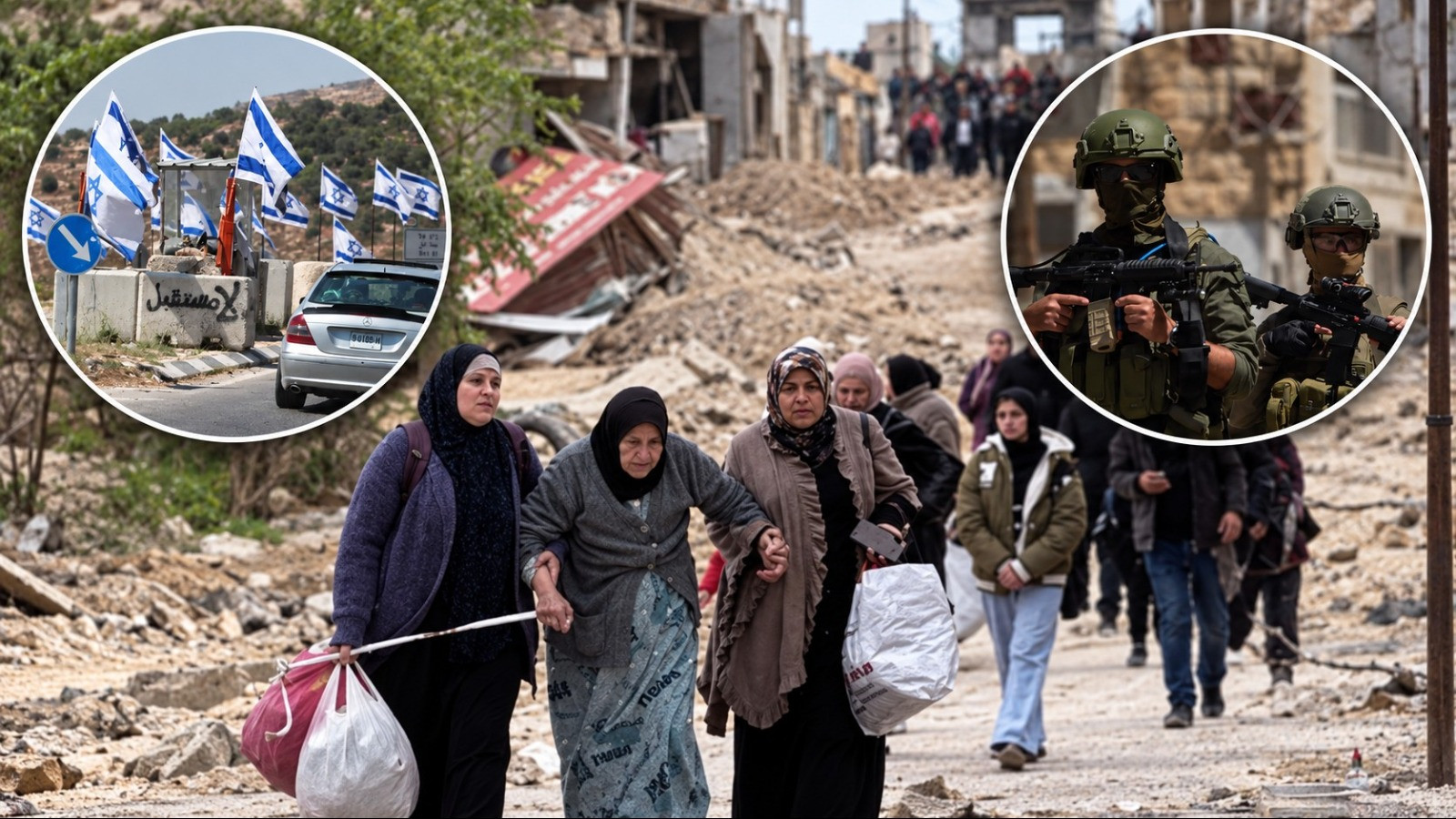
The report is based on testimonies from nearly 2,000 Palestinians.
Every week, Palestinians in the occupied West Bank face dozens of incidents of Israeli violence and oppression that may appear distinct at first glance, but are actually part of a planned conspiracy by Israel to displace Palestinians from their land.
In early September, Israeli soldiers killed two teenagers during a military raid in al-Mughayyir, located east of Ramallah. A few days later, Israeli soldiers demolished all homes in Khirbet al-Tubban in Masafer Yatta, leaving around 70 people homeless, including 30 children. In Qusra, south of Nablus, Israeli settlers have besieged three families in their homes for over a month, cutting off their electricity and water supply.
Israeli human rights organization B’Tselem stated in its new report The Elimination Project, published on Monday, that these are not isolated incidents. According to the organization, all these actions collectively serve a single purpose—
to make life impossible for Palestinians on their land and to establish permanent Israeli control in its place.
B’Tselem stated that the current situation in the West Bank is “neither a temporary crisis nor a collection of sudden, separate human rights violations.”
The report stated that,
it is “part of an ongoing project to eliminate Palestinians within the Israeli apartheid system. This project is driven by a settler-colonial mindset that seeks to seize their land, displace them, and establish Jewish-Israeli sovereignty there.” The report is titled The Elimination Project.
Based on testimonies from nearly 2,000 Palestinians, this report states that the seemingly disparate actions carried out by Israel are actually part of a “comprehensive project of elimination.”
B’Tselem refers to ‘elimination’ as a systematic process of displacing Palestinian society. This includes undermining Palestinian institutions and economy, restricting freedom of movement, and destroying their social life.
The report links this process to the “fundamental logic of settler colonialism.” Its aim is to establish “permanent sovereignty of settlers” over a territory where indigenous people already reside. This involves expelling the indigenous population from their land, seizing their property, and erasing their collective existence.
The report identifies five fronts through which this process operates—
- Violence and intimidation
- Restrictions on movement
- Economic weakening
- Destruction of social and political structures
- Ethnic cleansing and territorial seizure
B’Tselem also connects this thinking to the ‘Decisive Plan’ developed by Bezalel Smotrich in 2017. Smotrich is currently the Finance Minister of Israel.
B’Tselem states,
this plan presented three options to Palestinians—accept Jewish supremacy by abandoning their national aspirations, leave their land, or face violent repression. The report states that none of this is new. This system has been operating for decades. However, it has now become much more severe and overt than before.
Since the rise of the current far-right Israeli government at the end of 2022, this process has accelerated. The situation worsened further after the war against Palestinians in the Gaza Strip began in October 2023. The report describes this war as a “genocidal war.”
The daily lives of nearly 3.5 million Palestinians living in the West Bank and occupied East Jerusalem are increasingly restricted. They cannot use many roads, access their land, and safe places to live, work, and move around are continually diminishing.
By December 2025, Israel had established at least 925 physical barriers restricting movement in the West Bank. This was the highest number recorded by the United Nations in the last two decades.
Yusuf Kashur, a father of six and a driver from Dura, south of Hebron, told B’Tselem that the growing network of gates and checkpoints has turned his work into “torture.” He has to take long and dangerous alternative routes, causing him to turn down bookings from passengers he previously relied on for income.
Kashur said,
these trips are very exhausting, take a lot of time, and the fuel costs are so high that I cannot earn enough to meet my family's needs.
These restrictions have led to a widespread economic crisis. The occupation regime controls the borders, trade, and revenue of Palestinian territories. Therefore, the economy of the West Bank has very little room to operate independently.
By the end of last year, the unemployment rate in the West Bank had risen to nearly 27.5 percent. This was almost double compared to October 2023. A major reason for this was the suspension of work permits for around 1,15,000 Palestinians in Israel.
this economic pressure is being deliberately created. It becomes easier to uproot a family that cannot earn. When Palestinians try to rely on their farming and land, they are also pursued.
After losing his job in Israel, Jameel Abu Rayan began working in his vineyard near Halhul. But he found that Israeli settlers had established an illegal outpost on his main land. Soldiers also prevented him from going to another plot, claiming it was “[Israeli] government land.”
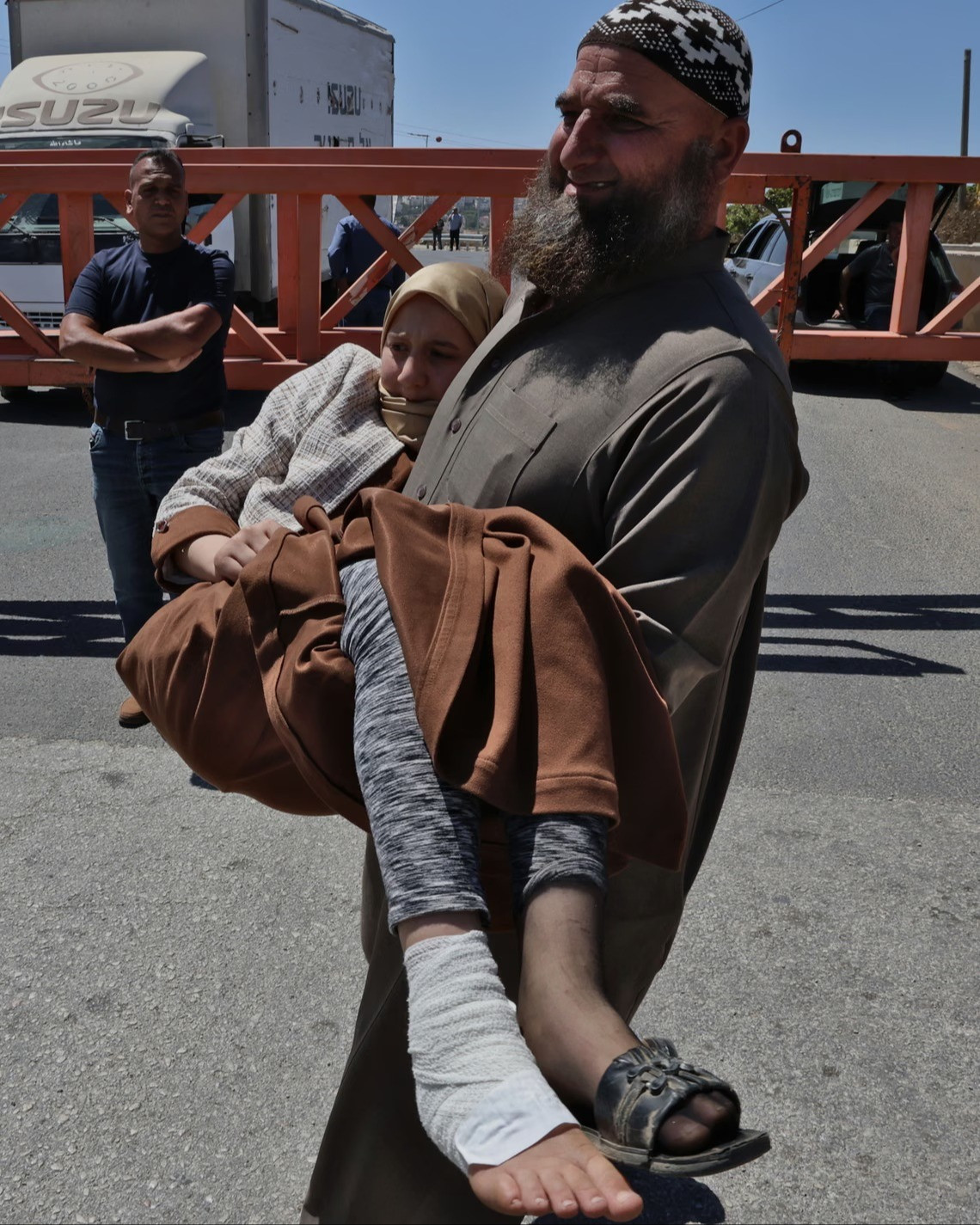
Abu Rayan told B’Tselem that he suffered about 60 percent loss of his grape harvest for 2025. Now he cannot even work properly on his land. Remembering an attack that occurred in late January in the southern Hebron hills, Ismail Khalayleh said,
An Israeli settler threatened to evict them by holding a gun to their forehead. He said, “I am giving you 24 hours to leave this place.”
Several Palestinian communities in the southern Hebron hills are facing the threat of forced displacement.
The United Nations Office for the Coordination of Humanitarian Affairs, OCHA recorded over 1,600 attacks by Israeli settlers last year. This pressure extends to Palestinians' right to build homes. According to OCHA, Israeli authorities have made it “almost impossible” for Palestinians to obtain permits for construction.
As Palestinian communities are being removed from their land, illegal Israeli settlements are expanding. The current Israeli government has approved a record 104 new settlements since 2022.
The difficulties created by Israel are affecting not only adult Palestinians but also newborns. According to a report by France 24, entering the world for babies born in Gaza is extremely risky. Humanitarian conditions remain dire in this war-torn region bordering Israel and Egypt. Hatem Dahir, head of the neonatal department at Nasser Hospital in Khan Younis in southern Gaza, said,
“The situation is extremely critical. There is no oxygen available for these children, and there is not a single extra incubator in the hospital.”
He told the AFP news agency, “We are trying to transfer children to other hospitals, but they are always full there too. The conditions are very bad. Most of the children need oxygen, and their weight is extremely low. The situation is getting worse and worse.”
The war between Israel and Hamas has severely devastated the healthcare system in the Palestinian territories. Many medical centers are either completely or partially non-operational. Due to the restrictions imposed by Israel on the entry of goods into the Gaza Strip, there is a severe shortage of medicines, medical equipment, and items related to specialized treatment. Despite the announcement of a U.S.-backed ceasefire in October 2025, the Israeli army continues to target Palestinians.
A United Nations investigation published in June report stated that severe shortages of food, medical supplies, and fuel, along with the collapse of health services, have had a significant impact on maternal health.